
JOHANN PACHELBEL – HEXACHORDUM APOLLINIS – Tomas Dratva
Tomas Dratva – Piano
Coming soon
Free e-booklet as pdf:
Digital booklet Pachelbel PV117
Buy the CD in the PIANOVERSAL SHOP: PIANOVERSAL-SHOP
© PIANOVERSAL
Pachelbel’s Hexachordum Apollinis (1699) comprises six arias with variations on original themes. It is widely regarded as one of the highlights of Pachelbel’s oeuvre and demonstrates his mastery of the art of variation. The work is explicitly designed for different keyboard instruments, the organ and the cembalo (“Organo pneumatico, vel clavato cymbalo modulandas”) and demonstrates the tonal possibilities of both instruments.
Tomas Dratva consistently continues Pachelbel’s openness to instrument and sound by recording the work on the modern concert grand piano.
Hexachordum Apollinis
For Johann Pachelbel, music is “the true crown and the most heartfelt throne” of all the arts. It has the power to move the “hearts and minds” of its listeners, is sung by angels, and, according to the calculations of ancient Greek philosophers, underlies the harmony of the planets and of the entire universe. In the preface to his cycle Hexachordum Apollinis, Pachelbel explains the elevated status of music and describes it as “divine”, “marvelous”, and the “most delightful enchantment”, associated with “Prince Apollo”.
This aesthetic conviction forms the foundation of the six arias and variations that Johann Pachelbel composed in 1699. The delicate and contemplative opening of the first aria immediately touches the heart, while the initial determination of the “Aria Secunda” turns after only a few moments into warm reconciliation. The third aria – the first and only one in the cycle written in a major key – awakens the “mind and spirit” through its light, playful character, whereas the fourth initially appears dramatic through its use of chromaticism. Yet it soon transforms into a lyrical second section that the performer Tomas Dratva describes as “angélique.” Equally angelic and “marvelous” is the “Aria Quinta”, with its carefully calculated, stepwise melodic writing. The final aria concludes the cycle in a mood of tranquil and reverent devotion.
With the title of this aria cycle, Pachelbel establishes a double connection to antiquity: the mention of Apollo recalls the Greek god of music, while the term hexachordum referred in the early Middle Ages to a six-note scale. In Pachelbel’s work, such a six-note scale forms the link between the first five arias in D minor, E minor, F major, G minor, and A minor. Only the final aria breaks this pattern, being written in F minor instead of the expected B-flat major. Pachelbel further distinguishes the sixth aria through a larger number of variations and the subtitle “Aria Sebaldina”. This title offers a clue to the reason for these deviations: at the time of composition, Pachelbel was organist at St. Sebaldus Church in Nuremberg, suggesting that he may have fashioned this sixth aria in its honor.
Nuremberg was Pachelbel’s hometown, where he also received his first fundamental musical education. After studying in Regensburg and spending several years in Vienna and Eisenach, he became acquainted with the Bach family in Erfurt, a connection that remained important throughout his life. In 1695, following further appointments in Stuttgart and Gotha, he returned to Nuremberg and assumed his position at St. Sebaldus Church. As a widely admired organist, Johann Pachelbel had often improvised variations based on chorale melodies; however, in the Hexachordum he creates entirely original themes. He allows himself the freedom to experiment with rapid changes of affect, lyrical melodies, and chromaticism. The ensuing variations testify to his compositional mastery: through ornamentation, imitation, syncopation, trills, and new rhythmic ideas, Pachelbel transforms the arias into virtuoso masterpieces. He dedicates the entire cycle to the organists Dieterich Buxtehude and Ferdinand Tobias Richter.
The original arias, their artfully crafted variations, and the conception of these pieces as a unified cycle made Pachelbel’s Hexachordum Apollinis one of his most celebrated works already during the Baroque era. Moreover, it is one of only three compositions by the composer that were printed during his lifetime. In the Hexachordum, Pachelbel does not prescribe a specific instrument but instead leaves performers the choice between “Organo pneumatico, vel clavato cymbalo” – the organ or the harpsichord. Building upon this concept of flexible instrumentation, Swiss pianist Tomas Dratva has chosen the modern concert grand piano for the first-ever complete recording of the cycle on this instrument. In doing so, he consciously departs from a central principle of historical performance practice: the aspiration to recreate as closely as possible the sound world of the period in which the music was composed.
At the same time, however, Tomas Dratva recalls Pachelbel’s openness regarding instrumentation and challenges contemporary assumptions about Baroque music. If, for Pachelbel, instrument and timbre were flexible, then the primary focus shifts instead to the affects, ornamentation, melody, and harmony – elements that can be realized in a similar manner on any keyboard instrument. It is precisely these aspects to which Tomas Dratva devotes particular attention in his interpretation. Through the familiar sound of the modern grand piano, he honors Pachelbel’s musical ideas with a carefully measured use of agogics, articulation, and dynamics. Tomas Dratva’s playing allows each individual voice to emerge with clarity while simultaneously blending into a coherent whole; within moments, he transforms the music from deeply moving contemplation to playful lightness and highlights compositional particularities such as the chromaticism of the “Aria Quarta”. In this recording, Tomas Dratva succeeds in presenting Johann Pachelbel’s masterpiece on the modern concert grand piano as an artful and richly layered composition.
Anna Hausmann
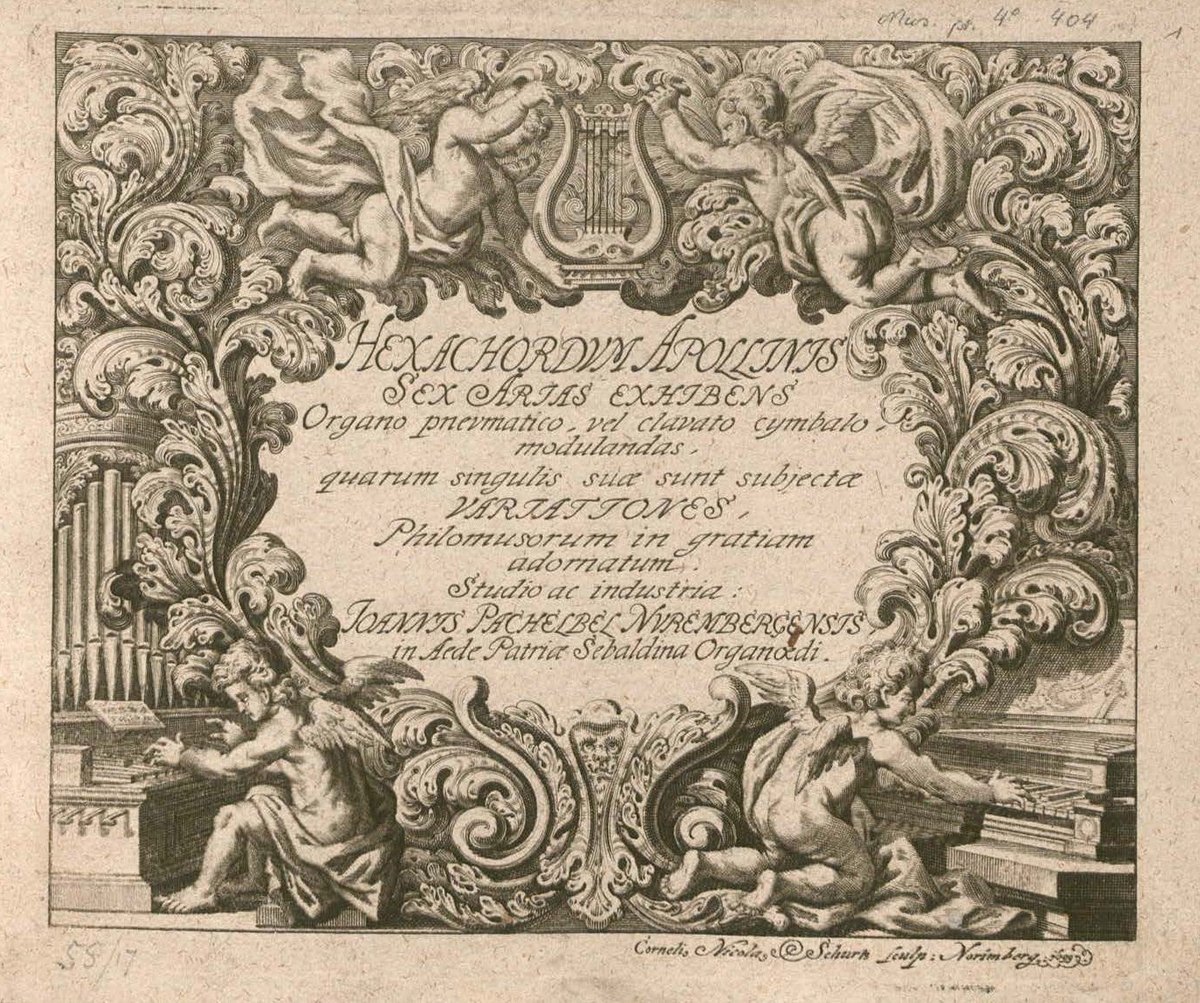
Facsimile of the original title page · source: wikipedia.org
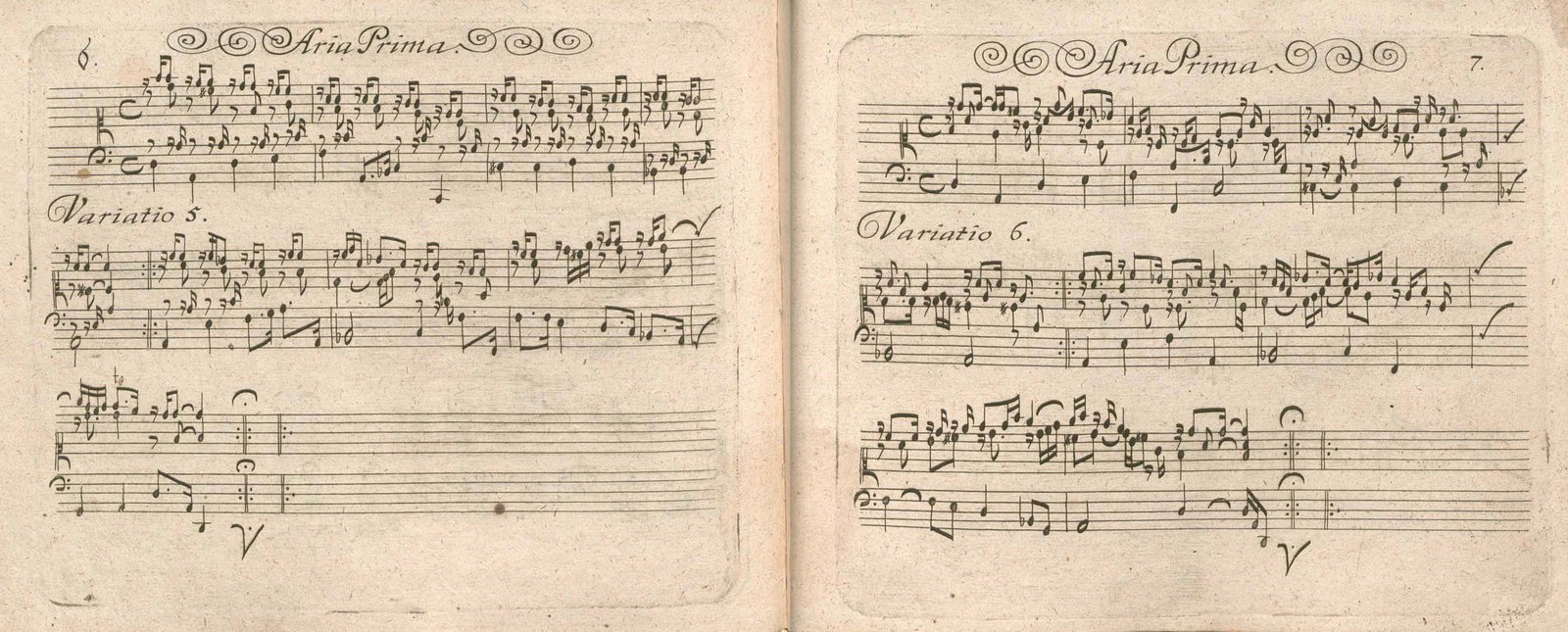
Aria Prima, Variatio 5 and 6 · facsimile: wikipedia.org
Track list
Johann Pachelbel (1653–1706): Hexachordum Apollinis
Total 59:06
Recording
15 October 2024, Künstlerhaus Boswil, Alte Kirche, Switzerland
Recording & editing: mobilton.ch, Daniel Scheidegger
Piano: Steinway D-274
Texts: Anna Hausmann, musicologist
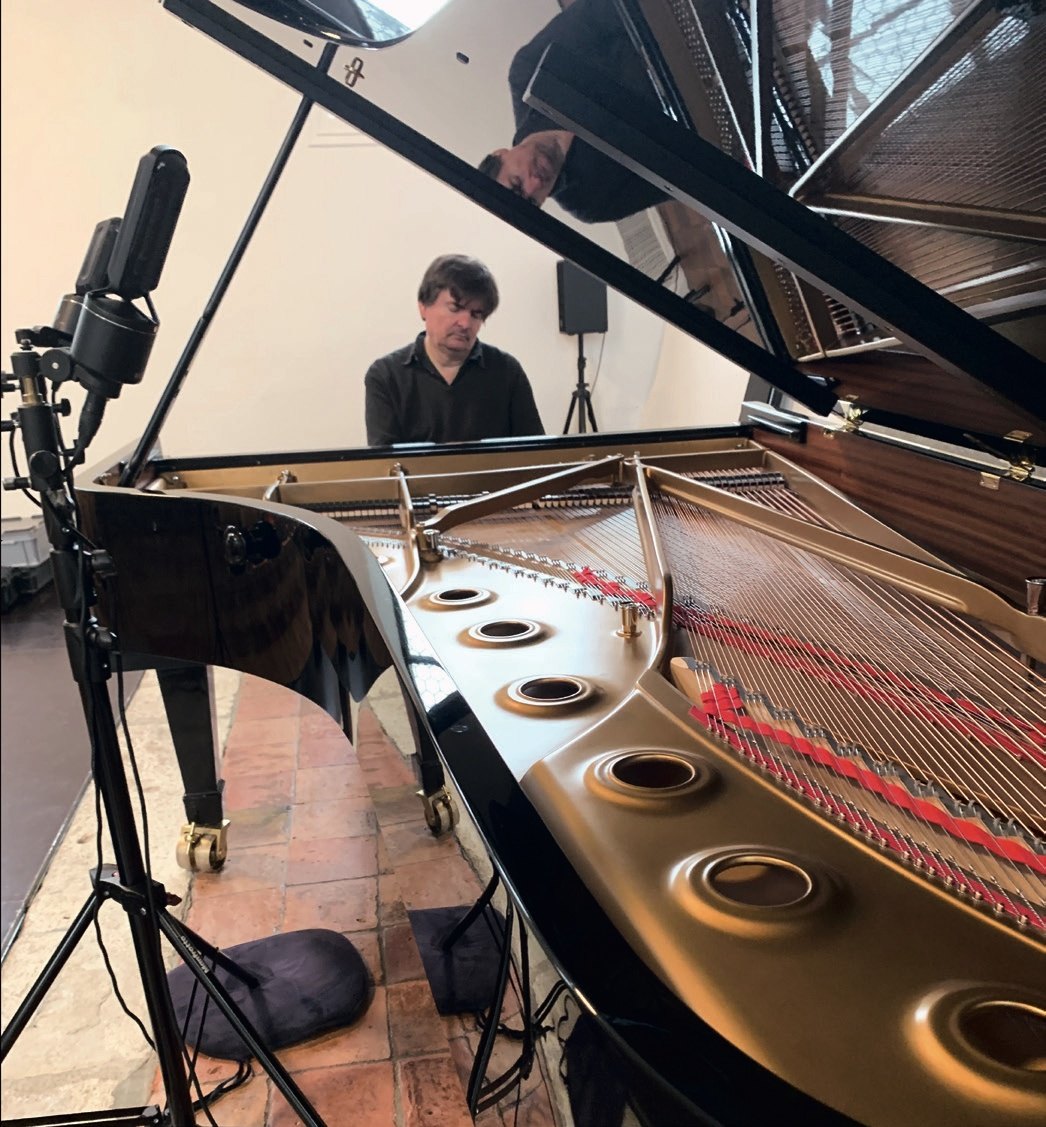
Tomas Dratva during the recording at Künstlerhaus Boswil, Alte Kirche · photo: Daniel Scheidegger
The Hexachordum Apollinis was a project close to Tomas Dratva’s heart, which he allowed to mature for a long time before recording it in 2024. He passed away unexpectedly in October 2025. Tomas Dratva leaves us with a unique and timeless interpretation of this work.