
JÁNOS TAMÁS – PIANO MUSIC – Magdaléna Bajuszová
Magdaléna Bajuszová – Piano
Coming soon
Free e-booklet as pdf:
Digital booklet János Tamás PV116
Buy the album in the PIANOVERSAL SHOP: PIANOVERSAL-SHOP
© PIANOVERSAL
The Swiss-Hungarian composer János Tamás (1936 –1995), born in Budapest, fled to Switzerland during the 1956 Hungarian uprising, and worked there as a composer, conductor, music educator and pianist until his death. Following early works influenced by the Hungarian tradition, Tamás developed a distinctive musical language that oscillates between poetry and drama. The piano occupies a central place in this, both as a solo and a chamber music instrument. This recording presents, for the first time, a comprehensive portrait of János Tamás’s piano music: a reflection of a significant musical oeuvre that, for the most part, still remains to be discovered.
Piano Works by János Tamás (1936–1995)
The Hungarian-Swiss composer János Tamás remained far from the major musical centers of the world throughout his life, yet his music addresses universal themes and forms a rich body of work distinguished by its diversity and expressive depth. Born in Budapest, he fled to Switzerland at the age of twenty after the failed Hungarian Revolution of 1956, where he found a new home and pursued an active artistic career as a composer, conductor, pianist and teacher. His compositional legacy comprises around 125 works, including major pieces such as the oratorio Noah’s Daughter (1986), the string sextet Waiting Spring (1991, commissioned by Paul Sacher), and the Piano Concerto (1965), which was only premiered half a century after its composition by Tomas Dratva and the kammerorchesterbasel under the direction of Paul Goodwin.
Works for solo piano occupy a particularly important place in his oeuvre. The pieces featured on this CD (some of them first recordings) reflect more than thirty years of artistic development, from the early Sonatina to the deeply moving Ballade from Tamás’s final creative period.
The Sonatina, dating from the fateful year 1956, is by no means the light piece its title might suggest; despite its brevity, it is quite demanding both in construction and emotionally. In the first movement of the three-movement work, the 20-year-old composer develops a simple motive in a highly complex way, often contrapuntally, with chromatic voice-leading. The middle movement, a Pastorale, is delicate, expressive, and somewhat mysterious. The ensuing finale, which connects to the last note of the Pastorale, is a wild dance in the asymmetrical meter of 3+3+2/8, clearly revealing the composer’s Hungarian roots.
The next work in chronological order, Lichtspiel (1971), comes from an entirely different world—quite literally. At the time of its composition, Tamás was already 35, a Swiss citizen, a busy conductor, and the father of a son, and had developed a distinctive personal style. Tomas Dratva wrote in the CD booklet of the first recording:
“Lichtspiel was composed during a summer stay dedicated to composing in the Bernese Oberland. The piece is inspired by the play of light in a modern villa in Wengen, where Tamás wrote it. In this study of trills and tremolo sounds, Tamás develops coherent, individualized notation techniques. With the exception of the last two notes, the piece unfolds entirely in the upper register of the piano, resulting in a very bright overall sound color.”1
Regarding Eisblumen (1977), a pedagogical collection that has become a compulsory piece for the Swiss Youth Music Competition, Tamás himself wrote:
“The 14 miniatures for piano convey aphoristic mood studies for the art of touch, whose pedagogical aims lie in free shaping with a highly sensitive, expressive character, in a sense for tonal color, and in the use of the pedal.
Atmosphere, meditation, rubato playing, poetry, and sonic magic predominate, intended to stimulate imagination and intuition. Performer and listener alike may take pleasure in the gentle melancholy, in discovering what is hidden and merely hinted at.
‘Ice flowers’: bizarre, crystalline, whisper-delicate drawings of silence.”
It is characteristic that in these teaching pieces Tamás was primarily concerned with expressive nuance and beautiful piano sound rather than finger technique. The “ice flowers” of the title refer to delicate frost patterns that once formed on windowpanes in winter. For Tamás, this image likely carried a sense of nostalgia, combining the beauty of flower-like forms with the bitterness of winter cold. Such “flowers on the window” are also mentioned in Schubert’s Winterreise (“Frühlingstraum”). There may also be an echo of a well-known Hungarian youth novel by Ferenc Móra (1879–1934), cherished by the Tamás family. In most of the Eisblumen, Hungarian influence is less evident than in the early works, although the eighth movement (“Fortgang”) is an arrangement of a folk song (“Are you leaving, my dear? Yes, I am going”), also found in Béla Bartók’s For Children (Vol. II, No. 41), though treated quite differently there.
In the 1980s, Tamás composed three large sonatas in which his musical language reached its highest level of complexity. The Sonata No. 1 (1981) is dedicated to pianist Jean-Jacques Dünki, who gave its premiere and recorded it. Dünki described the work as inviting the performer into a “bath of contrasts”2 between harsh and delicate, wild and restrained, intensifying and relaxing. Detailed markings in the score point to its emotional content, and its three-movement fast – slow – fast structure moves from a kaleidoscopic first movement through a calmer but dramatically evolving middle movement to a striking “furioso” finale, characterized by complex polymetric writing.
The Sonata No. 2 (1984), dedicated to Christine Sigg-Schlatter, is in two movements. In the first movement, Improvvisando, Tamás abandons strict meter at the beginning and end. The second movement juxtaposes a perpetual-motion-like main section with a contrasting section built from a repeated motif interrupted by abrupt pauses.
The Sonata No. 3 (1989), commissioned by the Jubilee Foundation of the Swiss Bank Corporation, presents a fascinating experiment: its first movement is identical, note for note, to the finale of the Sonata No. 1 (with only two added introductory bars). What follows is an equally intense drama, culminating in a final movement marked by extreme calm. Tamás gave the sonata the programmatic title Peace, reflecting a lifelong longing shaped by his wartime childhood.
Alongside the sonatas, Tamás composed two highly dramatic late piano works. The Rhapsody (1980), despite its title, departs from traditional genre conventions. After a peaceful beginning, it erupts into emotional turbulence before eventually returning to calm, which ultimately prevails.
A similar contrast shapes Tamás’s final piano work, the Ballade (1990), but here the dramatic force dominates the opening and closing sections, surrounding a central calm episode. Unlike the Rhapsody, there is no consoling ending: the piece concludes with an “unrelenting” motif repeated twenty times in an overwhelming crescendo, ending in a triple fortissimo. The recurring image of “will-o’-the-wisps”, also found in the Sonata No. 3, may once again allude to Schubert’s Winterreise, however, here it seems to lead not to peace but – as in Schubert ‘s song – into darker depths.
Peter Laki
2 Jean-Jacques Dünki: «Zur 1. Sonate für Klavier von János Tamás». Der Komponist János Tamás (1936–1995): Beiträge zu Leben und Werk. Hrsg. Michael Schneider, Tomas Dratva und Judith Niederberger. Bern: Müller & Schade AG, 2017, S. 57–62 (hier 60.).
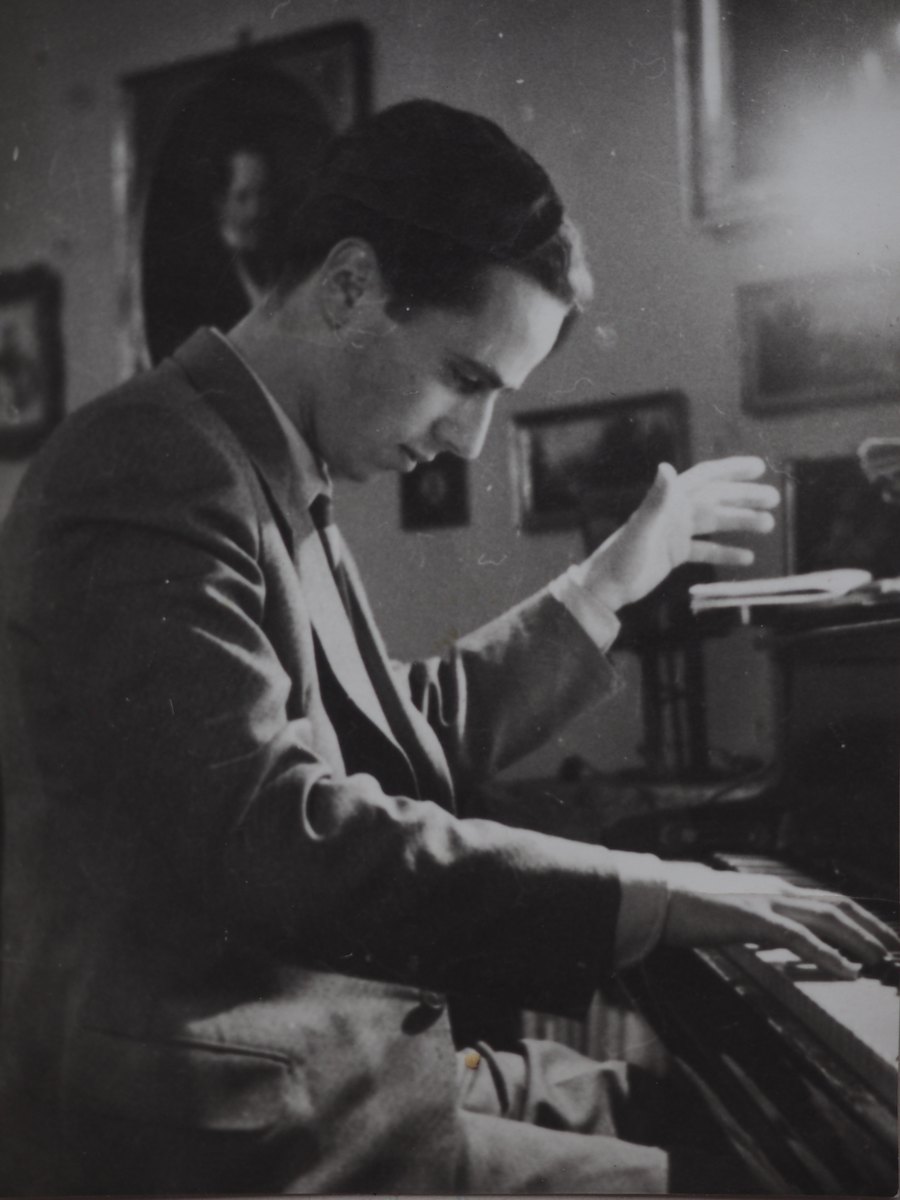
János Tamás at the piano, 1955 · photographer unknown · family ownership
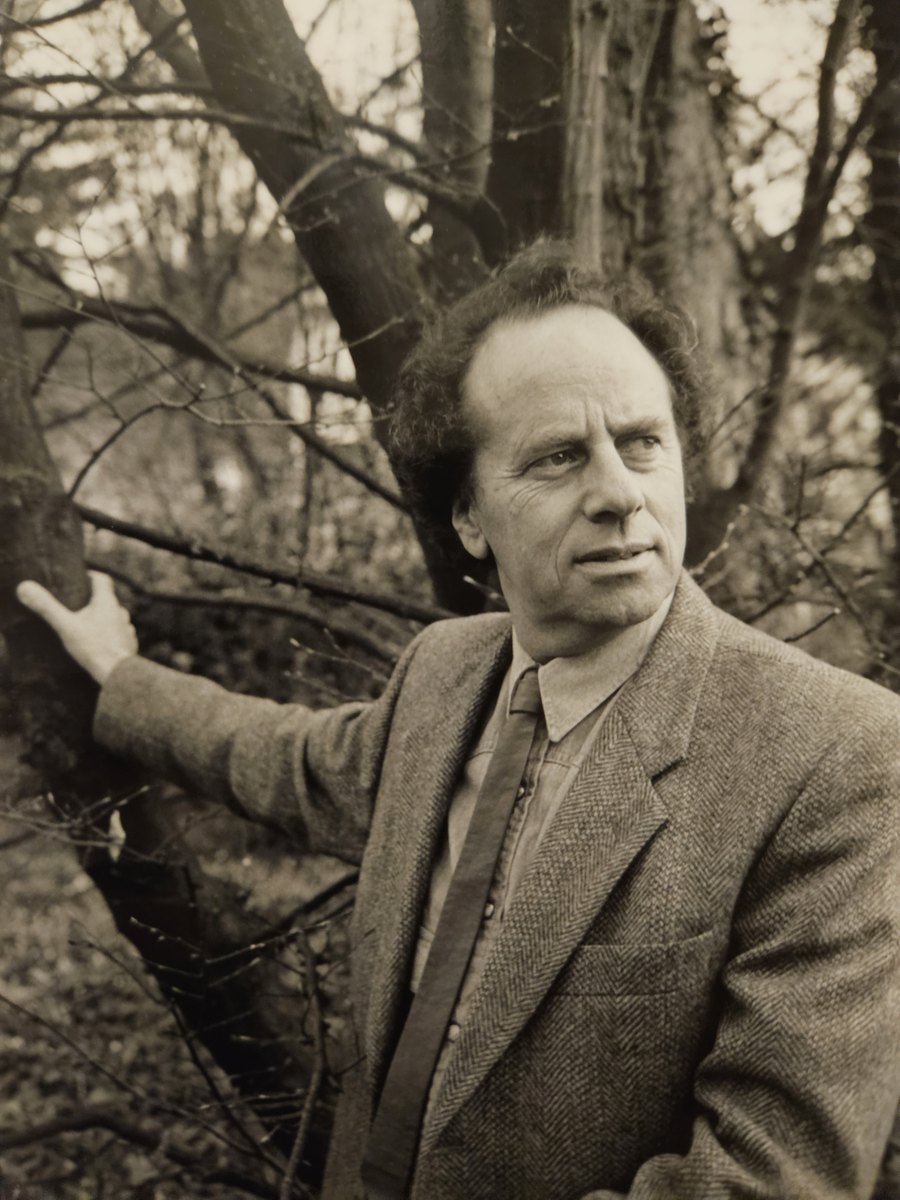
János Tamás, 1991 · photo: Max Kellenberger · family ownership
Track list
I. Sonate für Klavier
II. Sonate für Klavier
Sonatine
Rhapsodie für Klavier (Lotte Gautschi gewidmet)
Eisblumen – 14 Miniaturen für Klavier
III. Sonate für Klavier
Ballade
Lichtspiel
Total 79:21
Recording
Live recording from the concert of the Albrechtina Society “(Un)known Music” on June 22, 2025 in the Dvorana VŠMU Concert Hall in Bratislava.
Music director: Jozef Kovalčík · Recording engineer: Viliam Chovanec
Recorded on Steinway & Sons D274, Opus 593158
The production of this recording was initiated and financially supported by the János Tamás Society (www.janostamas.ch).